AI for geothermal: applying seismic-facies segmentation to a clean-energy reservoir
Major oil and gas companies have been scrambling to make ambitious climate commitments, pivoting capital to clean energy and ramping up solar and wind portfolios. Among the renewable candidates, geothermal has been quietly rising in profile because it solves a problem the others do not: it provides baseload power. Solar stops at night. Wind stops on calm days. Geothermal runs continuously.
“The AI capability oil and gas operators spent a decade refining for hydrocarbon interpretation transfers cleanly to geothermal. The pivot does not require a new ML team; it requires repointing the existing team at new training data.”
What geothermal power plants actually are
Geothermal power plants generate electricity from the Earth's internal thermal energy, the heat stored in the mantle and propagated to the crust by conduction and convection. Mechanically they are not exotic: instead of a coal-fired boiler or a nuclear reactor, the heat source is the Earth itself. The plant is fed by hot water or steam extracted through wells, and used water is typically reinjected to the formation.
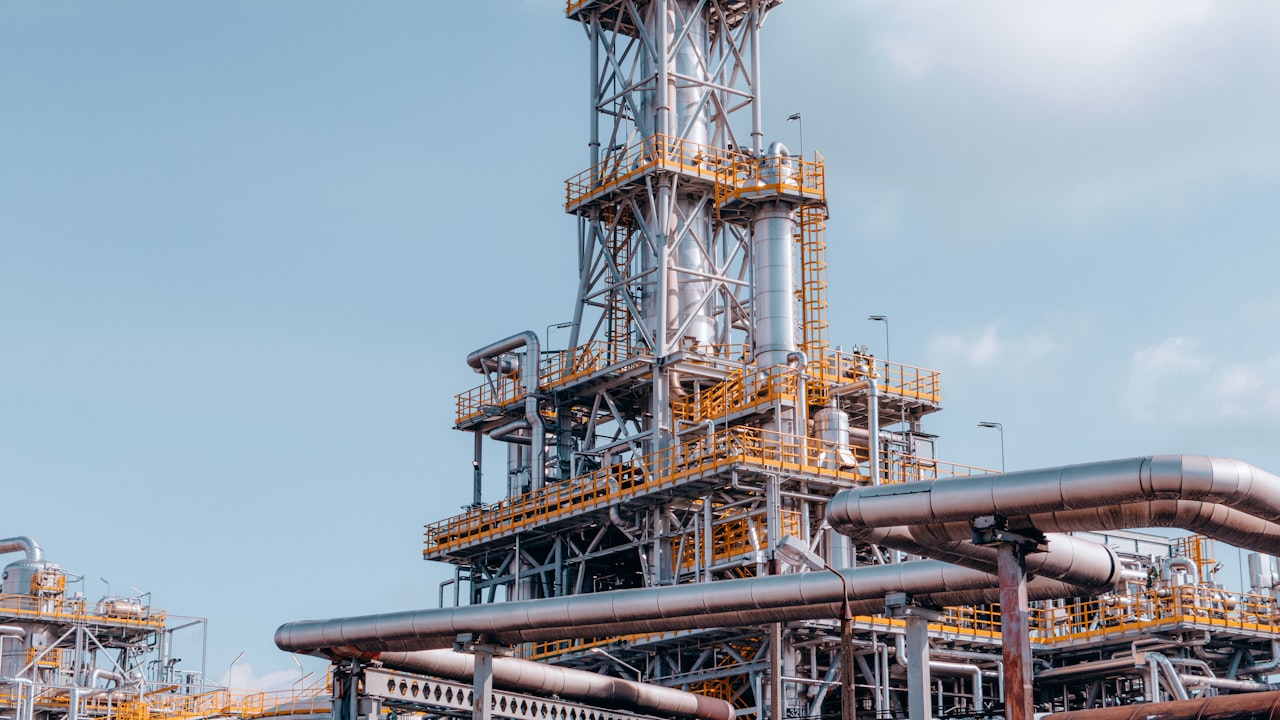
The headline operational difference from oil and gas: the resource is heat, not fluid. The fluid is just the conveyor. That changes the geophysics priorities. You care more about temperature gradients, fault permeability, and fluid circulation patterns than about porosity-volume products.
The Roosevelt Hot Springs case
The Roosevelt Hot Springs Geothermal Area in Utah is a major hydrothermal reservoir whose architecture is structurally dominated by a fault intersection. Two predominant features constrain the reservoir:
- The Opal Mound Fault, a major north-south structure
- The Negro Mag Fault, east-west, intersecting the Opal Mound
The recorded flow at one of the surface hot springs has decayed dramatically over the last century. The decline does not happen all at once: flow collapses first, temperature follows, surface expression dies last. The proposed heat source is a plume of partial-melt material underlying the central to western Mineral Mountains.
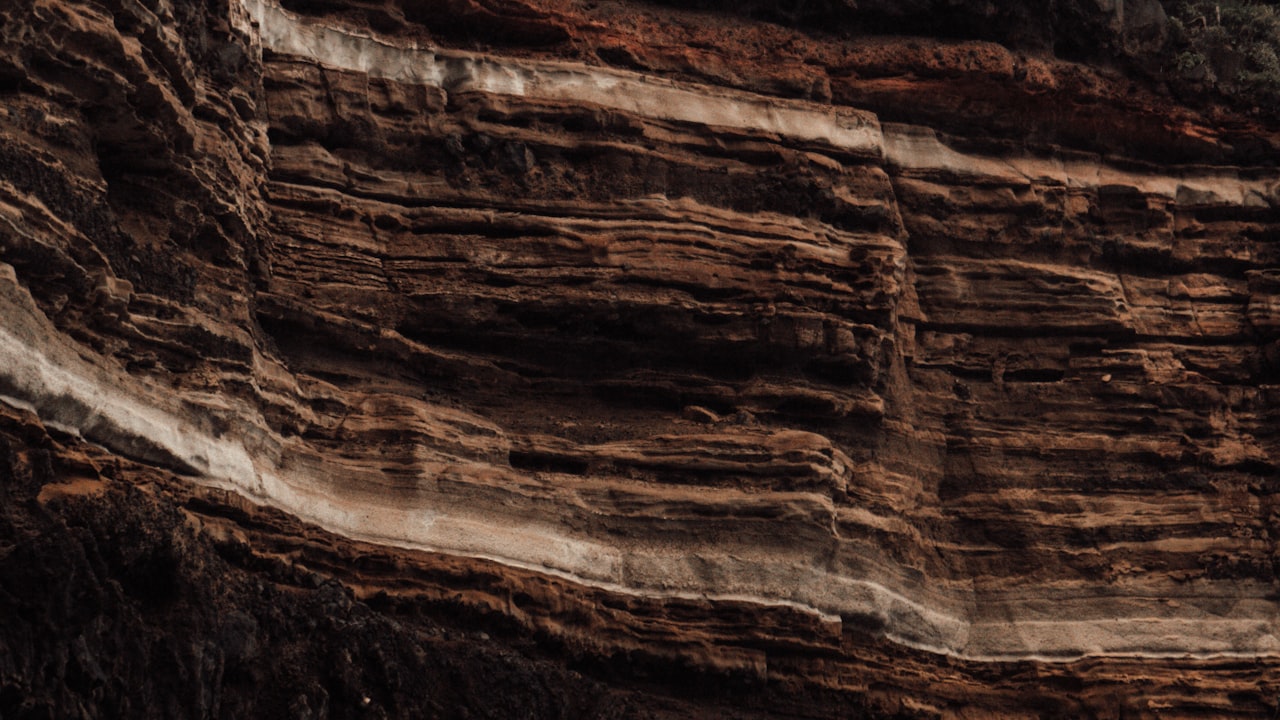
Drag the depth. Roosevelt's fault-fed hydrothermal cell runs far hotter than typical crust, crossing boiling within the first kilometre.
Automating seismic facies identification
The bottleneck in characterising any seismic reservoir, geothermal or otherwise, is interpretation throughput. A senior geophysicist labelling eight facies classes across a 3D volume by hand is slow, inconsistent across interpreters, and does not scale to repeat surveys.
The AI alternative trains a deep neural network on a small annotated subset and lets the network propagate the interpretation across the full volume, a task technically known as semantic segmentation.
Drag across the section. The network propagates an 8-class facies interpretation from a small labelled subset to the full volume.
8-class faciesThe training pipeline, concrete numbers
These numbers are not ceremonial. They are the right starting point for anyone trying to reproduce this on a new geothermal area. Patch stride and rotation augmentation in particular were both load-bearing for the test-set accuracy.
- Source data: processed 2D seismic, annotated into 8 facies classes from prominent horizons
- Patching: 40x40 patches with stride 10, trading training time for training-set richness
- Split: train inlines 1-271 (2,407 patches, 20% held out for validation); test inlines 272-321 (122 patches)
- Augmentation: random rotation up to 10 degrees, noise injection, horizontal flip
- Architecture: EarthAdaptNet, a residual encoder-decoder with U-Net-style skip connections
- Optimiser: Adam, learning rate 1e-3; loss: cross-entropy; batch: 32; epochs: 50
Predicted versus interpreted horizons
The network reproduces the major horizons cleanly. Where it disagrees with the expert interpretation, the disagreement is on fine-grained facies boundaries near fault intersections, exactly the regions where two human interpreters disagree with each other.
The AI alternative is not a replacement for the geophysicist. It is a force multiplier: the senior interpreter spends their time on the hard, ambiguous regions, and the network handles the volume.
Why this matters for the energy transition
The skills transfer. Every AI capability oil and gas operators have built for hydrocarbon exploration, from seismic interpretation to log digitisation to fault detection, has a direct analogue in geothermal. The pivot does not require a new ML team; it requires repointing the existing team at new training data.
Data is the bottleneck, not algorithms. Geothermal projects today have far less seismic coverage than mature oil and gas basins. Self-supervised pretraining on the much larger oil and gas archives, followed by fine-tuning on geothermal sites, is the obvious path forward.
- Baseload
- Continuous power generation that runs 24/7, the opposite of intermittent sources like solar and wind. Geothermal’s strategic edge in the renewables mix.
- EarthAdaptNet
- EarthScan's residual encoder-decoder network for seismic facies segmentation, with U-Net-style skip connections preserving spatial detail.
- Hydrothermal
- A geothermal system where heated water or steam is the working fluid that conveys subsurface heat to the surface.
- Semantic segmentation
- Per-pixel classification: assigning each pixel of an image to one of N classes. In seismic interpretation, the classes are facies.
- Facies
- Distinct rock characteristics inferred from seismic reflection patterns, the geological units an interpreter labels.