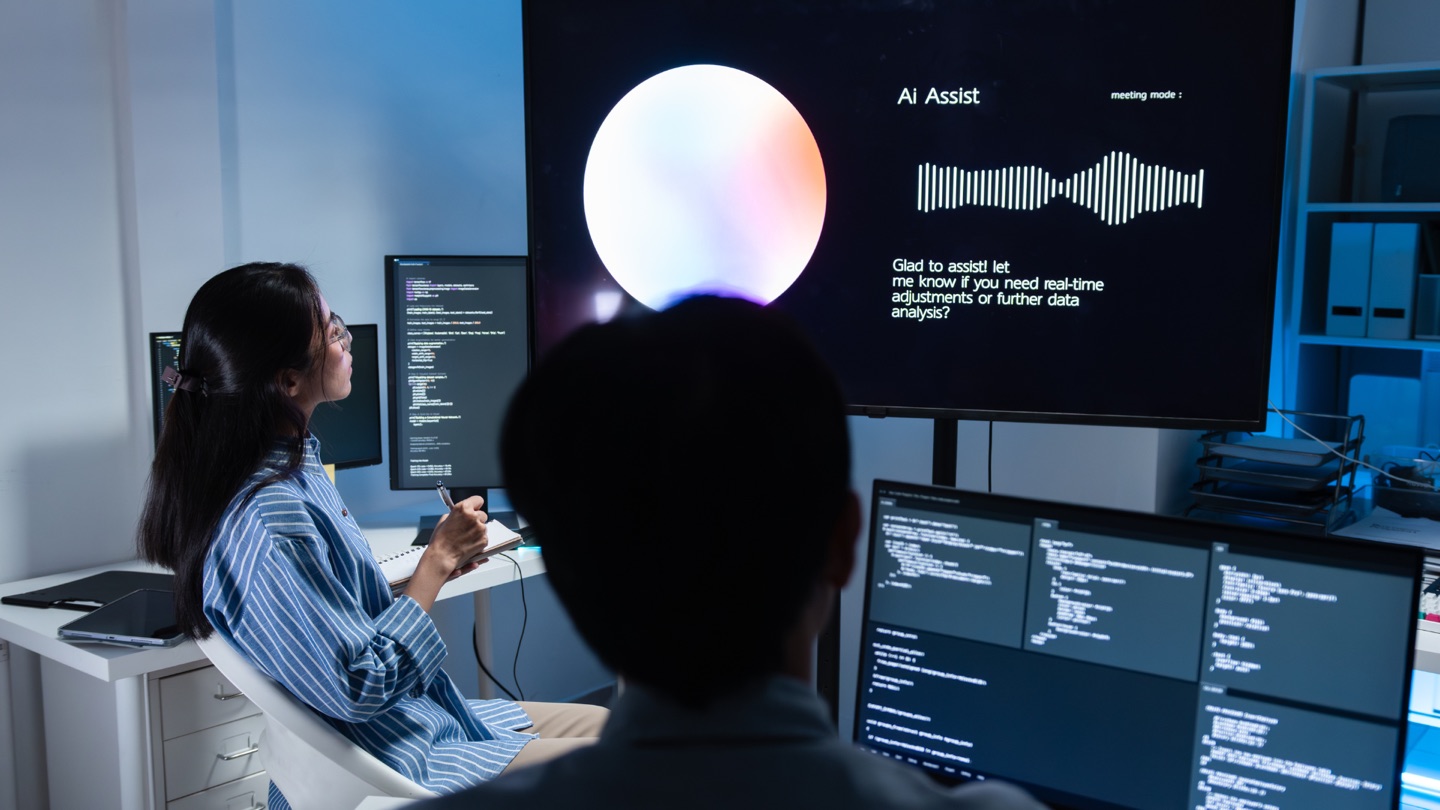

Subsurface imaging today is slow because it is expert-bound: a handful of specialists manually shepherd seismic data through a chain of tools before anyone can act on the result. An Agent OS collapses that chain into an orchestrated pipeline of autonomous agents that fetch data, compute receiver functions, invert for structure, and draft a permit-ready report, with a human-in-loop critic gating every release. The business case is straightforward: turn a multi-week, single-threaded expert task into a supervised, repeatable process that runs in hours, cuts geological risk before capital is committed, and produces an auditable record regulators can trust. The critic node is the point. It is what lets you automate aggressively without giving up accountability.
The bottleneck is expert time, not compute
The scarce resource in imaging is not GPUs; it is the senior interpreter who knows how to sequence the tools and sanity-check each intermediate result. Two of those tools deserve a one-line gloss. A receiver function is the standard seismological product that converts earthquake recordings at a station into a profile of the boundaries beneath it. Inversion is the step that turns those profiles into a structural model of the crust, and it is a step where many different models can fit the same data, which is why the sanity check matters.
That senior interpreter is a single point of failure and a scheduling bottleneck. An Agent OS moves the routine sequencing into software and reserves expert attention for the one decision that matters: approve or reject. The payoff is capacity. One reviewer can oversee many runs instead of hand-driving one, and the workflow no longer stalls when that reviewer is on a plane or on leave.
Weeks become hours
A conventional imaging pass, from raw waveforms to a defensible structural model, is commonly a multi-week effort once data handling, tool hand-offs, and review cycles are counted. Orchestrated agents run the same chain end to end without idle hand-off time. In an illustrative internal benchmark, a run that took roughly three weeks of elapsed time compressed to under a day of wall-clock time, with expert involvement reduced to a single review gate. Those figures are illustrative, not from a production deployment, but the shape of the change is the argument: the calendar time was never in the computation. It was in the hand-offs.
Autonomy without a critic is a liability
Full automation with no review is fast and wrong. Inversion is non-unique, data can be noisy, and a plausible-looking model can be geologically indefensible. Shipping that unreviewed is exactly the kind of error that surfaces in a permit hearing. The human-in-loop critic converts speed into trustworthy speed. It is the difference between a demo and a system you can put in front of a regulator.
The console below makes the trade concrete. It runs the same four-stage chain in three modes: manual, Agent OS with the critic gate on, and Agent OS with the gate off. Watch the four run-economics readouts as you switch. The gate-off column is a warning, not a recommendation: throughput is identical to gate-on, but errors caught before release collapse from roughly 94% to roughly 31% in the illustrative benchmark, and the audit log disappears with them.
The critic is your audit trail
Every approve/reject decision, with its rationale and the artifact it acted on, is logged. That log is the provenance record: who signed off, on what evidence, when. For regulated work, this is not overhead; it is the deliverable. An auditable chain of custody from raw data to signed report is often the thing standing between a project and its permit.
Standardization kills variance
When each project is hand-driven, quality tracks whoever happened to run it. An Agent OS pins the pipeline: same stages, same parameters, same checks, every time. Variance between analysts collapses. Standardization also makes results comparable across sites and across years, which is what turns a pile of one-off studies into a defensible portfolio.
Risk is reduced before capital is committed
The value of imaging is decisions avoided: not drilling the dry hole, not siting on an unstable structure, not underestimating a hazard. Faster, more consistent imaging means those decisions are informed earlier, when changing course is cheap. Pulling a go/no-go decision forward by weeks, on a project where a wrong call costs millions, dwarfs the cost of the compute that produced it.
The gate is a dial, not a switch
Not every run needs the same scrutiny. Low-stakes reruns can pass on lighter review; permit-critical models get full sign-off. The Agent OS lets you set the gate policy by risk tier rather than treating all work identically. This is how you get most of the throughput of automation while spending expert attention only where it changes an outcome.
It fits the tools you already run
The Agent OS is an orchestration layer, not a rip-and-replace. It wraps existing inversion and modeling codes as agent-callable stages, so your validated methods stay in place and only the coordination and governance are new. That keeps adoption risk low: you are automating the hand-offs and adding a review gate, not betting the pipeline on unproven internals.
By the numbers
The table contrasts a manual workflow with a critic-gated Agent OS. All figures are illustrative and meant to show shape, not to report a specific deployment.
| Metric | Manual workflow | Agent OS, gate ON | Agent OS, gate OFF |
|---|---|---|---|
| Elapsed time per run | ~3 weeks | < 1 day | < 1 day |
| Expert hours per run | 30-40 | 2-4 | 0-1 |
| Runs per reviewer / week | 1 | 15-20 | n/a |
| Errors caught before release | ~90% | ~94% | ~31% |
| Auditable decision log | partial | full | none |
| Cost per run (relative) | 1.0x | 0.3x | 0.15x |
Limitations
The throughput, expert-hour, error-catch, and cost figures above and in the console are illustrative benchmarks built to communicate how a critic-gated pipeline behaves; they are not measurements from a live production deployment. The pipeline structure is adapted from an input/output flowchart in the source PhD research (LitMod3D, Fig 4.2), and the mapping to an agent-orchestration operating system is an interpretation, not a description of that thesis workflow. Error-catch rates in practice depend on reviewer skill, data quality, and how the gate policy is tiered, none of which a schematic can settle. And the critic gate governs release quality, not model correctness: a reviewer can only catch what the intermediate diagnostics surface, so the underlying receiver-function and inversion codes still need their own validation.
What this briefing argues
- The real bottleneck in subsurface imaging is expert time, not compute, and orchestration is how you relieve it.
- Chaining fetch, receiver-function, inversion, and reporting agents turns a multi-week task into a same-day one.
- Autonomy without a human-in-loop critic trades trustworthiness for speed and is unacceptable for regulated work.
- The critic node doubles as an audit trail, which is often the actual permit deliverable.
- Standardizing the pipeline collapses analyst-to-analyst variance and makes results comparable across sites and years.
- The review gate should be tuned by risk tier, and the Agent OS wraps existing validated codes rather than replacing them.
References
[1] Receiver function method for crustal imaging: Wikipedia
[2] Seismic inversion (overview): Wikipedia
[3] Human-in-the-loop systems (concept): Wikipedia
[4] Workflow orchestration and business process automation: Wikipedia
[5] Audit trail (concept): Wikipedia
[6] Source: 2018 PhD thesis, Fig 4.2 (LitMod3D input/output flowchart), adapted here as a schematic of the imaging chain.
EarthScan builds supervised, auditable imaging pipelines for teams making siting and injection decisions. To scope an Agent OS pilot against your own imaging workflow, we should talk.