Three operators announced AI and compute partnerships between May and September 2026, and each of them told the market about a different part of the machine.
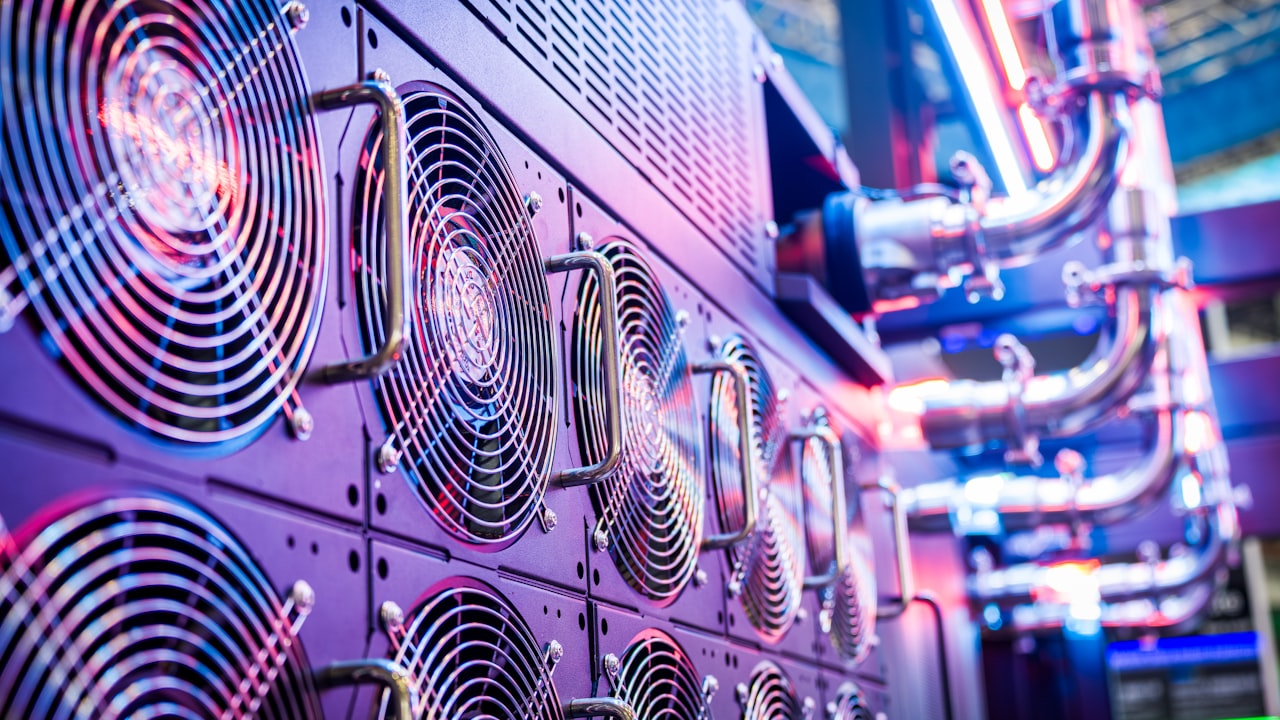
On 6 May 2026 Saudi Aramco said it was working with solutions by stc on a supercomputer with "seven times more compute capacity than is currently available for Aramco's Upstream operations", a USD 372.5 million project planned for delivery by early 2027 and described as "the largest deployment of computing infrastructure in Aramco's history" [1]. On 3 September 2026 PETRONAS, through Malaysia Petroleum Management (MPM), said it had signed an agreement with Iraya Energies "to enhance PETRONAS myPROdata with Agentic AI capabilities" [2]. On 15 September 2026 TotalEnergies announced "a 3-year joint program representing an investment of more than €100 million" with Mistral, to develop "a new generation of frontier AI models" for reservoir exploration and engineering [3].
Compute, a data platform, and models. Read one at a time, each is a complete announcement. Read against the stack that sits beneath any working model, they are three different slices of it, and the slice none of them describes is the one our own handovers turned on.
Three pages, and who is speaking on each
All three are first-party pages on the operators' own sites. The speaker, and the audience, differ.
Aramco's is an operator describing its own upstream compute. It quotes Abdul Hameed A. Al-Dughaither, Aramco's executive vice president of EXPEC and Drilling, and the machine is for "advanced seismic data processing and large-scale reservoir modeling and simulation" [1]. That phrase sounds like data work, and in the sense this piece cares about it is not: seismic data processing here is the imaging workload the supercomputer runs. The release also says what the partner does: "solutions by stc will deploy this infrastructure and provide software support and managed services" [1]. It describes no machine-learning model, no data pipeline and no platform.
The PETRONAS page is not an operator describing its own subsurface AI. It is MPM, which the release calls the "shaper, accelerator and regulator of Malaysia's upstream industry", upgrading a web platform that gives investors and industry players access to subsurface and surface data on Malaysia's exploration blocks, discoveries and producing fields [2]. "The enhanced platform will integrate geological, geophysical, engineering and other relevant data with Agentic AI capabilities that can autonomously analyse and connect multiple data sources", and Iraya Energies "will serve as the Consortium Lead Integrator, responsible for establishing the technical, commercial and security foundations required to deliver AI-powered insights" [2]. The release ties the work to an ambition of RM50 billion to RM60 billion a year in upstream investment and a discovery-to-first-hydrocarbon journey shortened from 100 months to 50. Those are ambitions, and nothing below treats them as results.
TotalEnergies' page is an operator describing a programme with a vendor, and it quotes both companies. The programme will "combine next to 10 petaflops of data" with the company's geoscience expertise [3]. A petaflop is a unit of computing speed rather than an amount of data, so that phrase is quoted exactly as TotalEnergies wrote it and not converted into anything. The release commits "a joint scientific laboratory", describes the aim "to create proprietary models within a European digital ecosystem", and has Arthur Mensch, Mistral's chief executive, speak of "customizable AI solutions that protect and respect their intellectual property" [3].
Six layers under every model
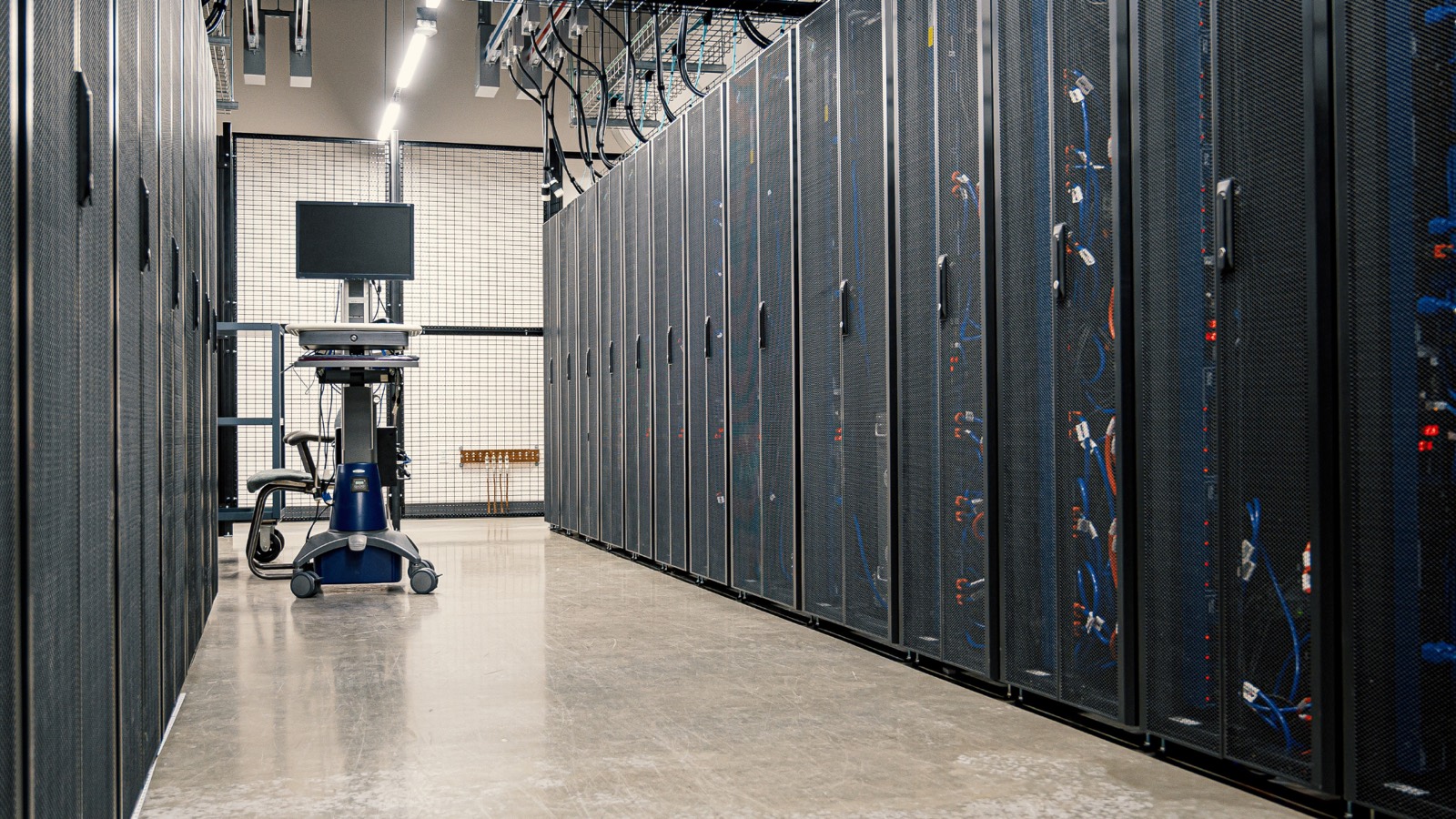
When we closed a multi-phase formation-evaluation programme with a Middle East carbonate operator, the final deliverable was a handover rather than a model. Our account of it names the stack a model sits on: "HPC, data engineering, data unification, the AI/ML layer itself, the agent/automation layer, and the deployment platform" [4]. It is plain about what that means for ownership. "Every layer of the six-layer stack below the model needs someone who can operate it", and "a handover is only as strong as its weakest transferred layer" [4].
The data engineering layer in that programme was not abstract. In the case study's words it was "a data engineer who understands why two of the ten wells in an early intake were excluded for abnormal static-image ranges before training (leaving eight usable)" [4]. A decision like that one sits inside every model trained afterwards, and nothing in the model's output shows it.
A second engagement taught the same lesson from the other direction. One confidentiality clause decided where the compute, the versioned data store and even the throwaway experiment sandboxes could live, and as our write-up of it puts it, "The clause fixed where the compute lived. It did not fix how much of it a hard research problem would burn" [5]. Our ownership whitepaper turns that experience into a sequencing rule: "answer data residency first because it can eliminate a tier outright" [6].
The bench
The map below lays the three releases over those six layers. Each column is a layer and each row is a release. A tall column means the release names that layer as the operator's own work or a joint one; a tall column in the second colour means it names the layer as the partner's; a short amber column means broader wording might cover the layer without saying so; a flat footprint means the release does not mention it. Every cell traces to a quoted phrase in the table under the map.
This release names 1 of 6 layers. Switch to all three together to see which layer no release names.
In our own handover, operator-plus-vendor: A hybrid where we retain the heavy MLOps lifting on managed infrastructure while the operator's team drives the interpretation workflow. None of the three releases describes its own hosting arrangement in these terms, so this control moves no column.
| layer | Saudi Aramco and solutions by stc, 6 May 2026 | PETRONAS and Iraya Energies, 3 September 2026 | TotalEnergies and Mistral, 15 September 2026 |
|---|---|---|---|
| HPC | named (operator or joint): “collaborating to deploy a next-generation high-performance supercomputer; solutions by stc will deploy this infrastructure and provide software support and managed services” | not mentioned | named as the partner's: “Leveraging the Expertise and Digital Infrastructure of a European Champion” |
| data engineering | not mentioned | possibly covered, not stated: “responsible for establishing the technical, commercial and security foundations required to deliver AI-powered insights” | not mentioned |
| data unification | not mentioned | named (operator or joint): “The enhanced platform will integrate geological, geophysical, engineering and other relevant data” | named (operator or joint): “able to integrate, process and interpret large volumes of data” |
| the AI/ML layer | not mentioned | not mentioned | named (operator or joint): “a new generation of frontier AI models” |
| the agent/automation layer | not mentioned | named (operator or joint): “Agentic AI capabilities that can autonomously analyse and connect multiple data sources” | named (operator or joint): “particularly agentic AI” |
| the deployment platform | not mentioned | named (operator or joint): “PETRONAS myPROdata is a web-based platform” | not mentioned |
What the map shows
Taken one release at a time, each row is coherent. Aramco's raises a single column, HPC, built with its partner. MPM's raises data unification, agents and the platform, which is what a data room for investors needs. TotalEnergies' raises the AI/ML layer and agents, adds data unification because its models are to be "able to integrate, process and interpret large volumes of data", and shows compute as the partner's, under a section of the release headed "Leveraging the Expertise and Digital Infrastructure of a European Champion" [3]. That last phrase describes what the models will do, not who prepares the data they learn from.
Now switch to all three together. Five of the six columns stand. The data engineering column stays down, apart from one short amber column on MPM's row, and that column is the honest near miss. MPM hands its integrator "the technical, commercial and security foundations" [2], which could include preparing the data and does not say so. The same release has MPM's senior vice president describing the aim as "bringing together trusted data and AI-powered intelligence" [2], without saying who makes the data trusted, or how.
That is the finding, and it is narrower than it might sound. It is not a claim that Aramco, MPM or TotalEnergies neglect data engineering; each of them may have it well in hand. It is that three announcements about AI and the compute beneath it, read together, describe five layers of the stack and leave the sixth unassigned, and that the sixth is the layer where a model inherits decisions nobody sees in its output. By the rule our handover was built on, a programme is only as strong as that layer, so whoever owns it in each partnership owns more of the result than any of the three pages says.
Where this reading is weakest
A press release is an announcement, not an architecture, and the absence of a layer from one is not evidence that the layer is missing from the programme. Each of these partnerships will rest on contracts, statements of work and data agreements that say far more than a newsroom page, and none of those is public. The map reads only what each operator chose to publish.
The assignments are ours. The six layer names come from our case study, and matching a phrase in a release to a layer is a judgement. Where a phrase could reasonably count either way, as MPM's "technical, commercial and security foundations" could, the map marks it as possible rather than deciding it. The Aramco release is about high-performance computing for seismic imaging and reservoir simulation, and the map does not treat it as a machine-learning programme.
The hosting options in the map come from one engagement of ours. They describe who ran the stack in that programme and are there to make the question concrete, not to predict how any of these three partnerships is organised.
Four questions before signing an AI partnership
Which of the six layers does the partnership assign, in writing, and to whom? If the answer covers compute, models and a platform, ask about data engineering and data unification by name.
Who decides which data a model is trained on, and where is that decision recorded? In our handover the answer was a named data engineer and a written exclusion, and every model trained afterwards inherited both.
Where does the data live, and does that answer remove an option before the architecture is drawn? Our ownership whitepaper puts residency first for exactly that reason [6].
And if the partner runs a layer, what happens to that layer when the arrangement ends? None of the three releases says.
A stack whose every layer sits inside the operator's own estate, including the data engineering beneath the model, is what the EarthScan platform is built for. If a partnership in front of you assigns five layers and leaves one open, book a conversation about the sixth.
Key takeaways
- Three first-party releases, three different layers. Saudi Aramco with solutions by stc, 6 May 2026, commits HPC for seismic imaging and reservoir simulation, deployed and supported by the partner. PETRONAS through MPM with Iraya Energies, 3 September 2026, commits data integration, agents and an investor-facing web platform. TotalEnergies with Mistral, 15 September 2026, commits proprietary frontier models, agents and a joint laboratory, with compute described as the partner's.
- Laid over the six-layer stack our handover case study names beneath a model, the three releases name five layers between them. None says who does data engineering, the layer where a model inherits decisions such as which wells are excluded before training. The nearest miss is MPM, whose integrator is responsible for the technical, commercial and security foundations, wording that might cover the data work without saying so.
- The claim is deliberately narrow. A release is not an architecture, and a layer absent from a newsroom page may be well handled in a contract. The practical question for any operator signing a partnership is which of the six layers the agreement assigns in writing, and to whom.
References
[1] Saudi Aramco. Aramco and solutions by stc collaborate to deploy next-generation supercomputer, powering Upstream digital excellence. 6 May 2026. https://www.aramco.com/en/news-media/news/2026/aramco-and-solutions-by-stc-collaborate-to-deploy-next-generation-supercomputer First-party, Aramco's own newsroom. High-performance computing for seismic processing and reservoir simulation; the partner deploys the infrastructure and provides software support and managed services.
[2] PETRONAS. PETRONAS Advances Malaysia's Upstream Data Platform with Agentic AI to Accelerate E&P Investment. 3 September 2026. https://www.petronas.com/media/media-releases/petronas-advances-malaysias-upstream-data-platform-agentic-ai-accelerate-ep First-party, issued by PETRONAS through Malaysia Petroleum Management, the regulator of Malaysia's upstream industry. The investment and schedule figures in it are ambitions.
[3] TotalEnergies. TotalEnergies Announces a Partnership with Mistral to Develop Frontier AI Models for Reservoir Exploration and Engineering. 15 September 2026. https://totalenergies.com/newsroom/totalenergies-annonce-un-partenariat-avec-mistral-en-vue-de-developper-des-modeles-de-frontiere-dintelligence-artificielle-dedies-a-lexploration-et-a-lingenierie-des-reservoirs-498514/?lang=eng First-party, TotalEnergies' own newsroom, quoting both companies.
[4] EarthScan. Handing Over the Keys: An ICT Transition and Capability-Transfer Plan That Left a National Operator Running Its Own AI. https://earthscan.io/case-studies/ict-handover-omanization-capability-transfer-milestone
[5] EarthScan. The DGX A100 Stack: Standing Up an On-Prem Research Bench for a Confidential Programme. https://earthscan.io/case-studies/dgx-a100-stack-on-prem-research-bench-confidential-programme
[6] EarthScan. After the R&D Ends: Three Ownership Models for the AI You Just Built. https://earthscan.io/whitepapers/three-ownership-models-for-the-ai-you-built