
Two years ago, oil and gas was AI's slowest customer. In 2026, it quietly became AI's biggest builder - and its biggest power supplier. Most people haven't noticed yet.
Why this matters
The boundary between an oilfield services company and an AI infrastructure company is dissolving. SLB is manufacturing modular data centers in a 3.1M sq ft Louisiana facility. Aramco is running its own AI supercomputer behind a 250-billion-parameter industrial LLM. ADNOC has signed a three-year, $340M contract to roll an in-house 70B-parameter model across all 28 of its producing fields [1][2][3].
The winners in AI will be companies with the best data, the deepest domain expertise and the ability to scale.
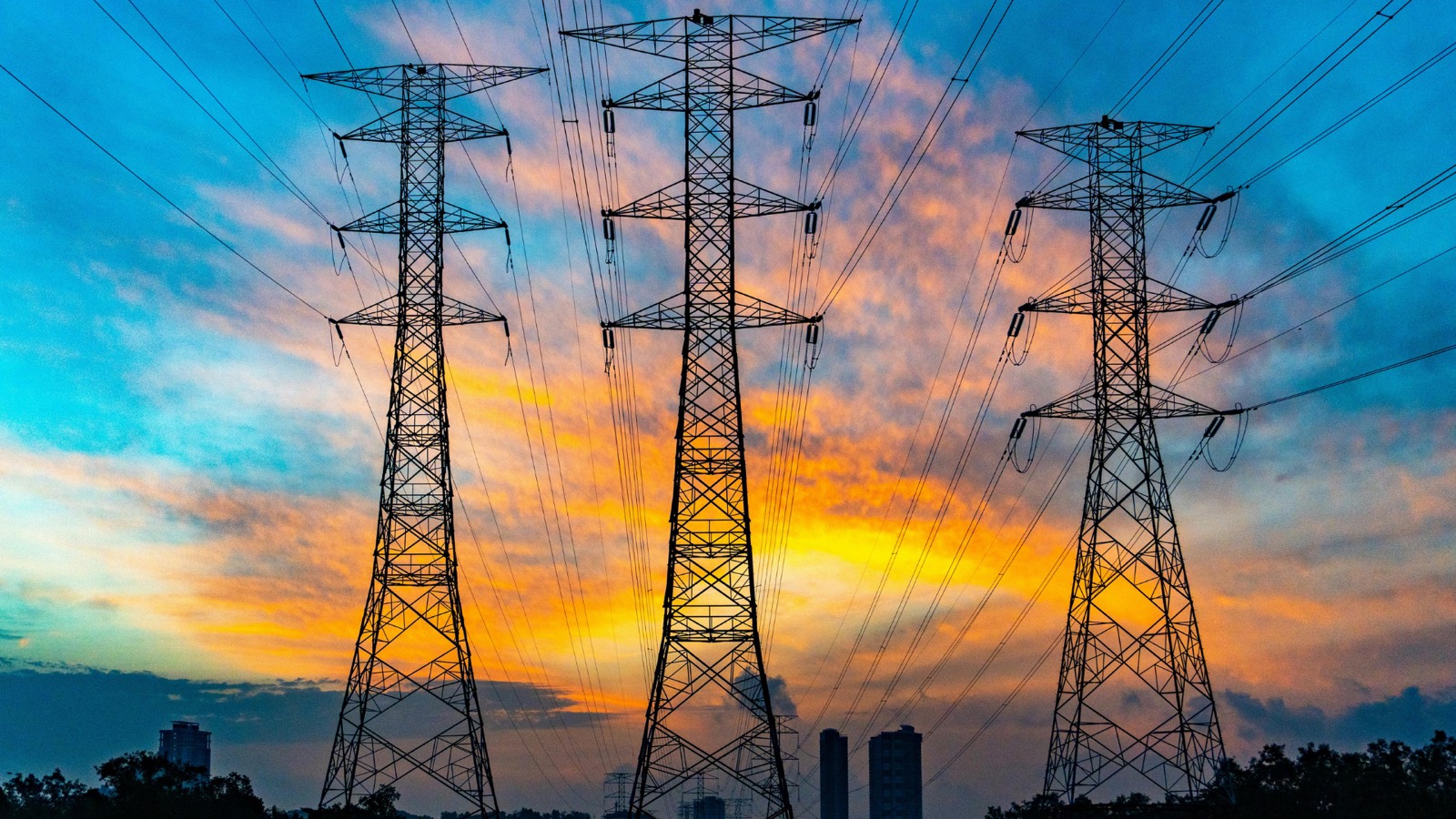
At the same time, hyperscaler capex - roughly $602B planned for 2026 - is landing as gas turbine orders and behind-the-meter PPAs in Texas, Pennsylvania, and Louisiana [4][5]. The industry is on both sides of the AI trade: buying GPUs from NVIDIA and selling baseload power back to the people training frontier models. For an asset-team geophysicist, the practical consequence is that the data you generate is now the training corpus for the model your operator will run next quarter.
The current state
The numbers tell a coherent story. The AI-in-oil-and-gas market is projected at roughly $7.6B in 2026, growing to ~$25B by 2034 at a 12-14% CAGR [6]. ADNOC's ENERGYai proof-of-concept reported a 70% lift in seismic interpretation accuracy, geological model build accelerated up to 75%, and field development planning compressed from 1-2 years to weeks [2]. Aramco reports analysing roughly 10 billion data points per day and ~$4B in technology-driven gains in 2024 alone [3].
ADNOC ENERGYai - measured operational gains
lift in seismic interpretation accuracy
faster geological model build
3-year deployment across 28 fields
parameter sovereign LLM
Power is the second axis. Texas approved Pacifico Energy's 7.7 GW GW Ranch gas turbine project in January 2026 - the largest gas-for-AI power project greenlit in the US to date - and NextEra cleared two large gas plants totalling 10 GW in Texas and Pennsylvania, both targeted at the AI load curve [4]. Gas grid-interconnection cost sits near $24/kW versus ~$253/kW for solar, which is most of the reason the capacity mix is bending the way it is [4].
What changed: sovereign models, agentic stacks, modular DCs
Three things shifted in 2026 that were not true in 2024.
First, sovereign LLMs. Aramco's Metabrain - 250B parameters, with a trillion-parameter version on the roadmap - is trained on 90 years of proprietary oilfield and geological data, backed by an in-house NVIDIA supercomputer plus partnerships with Cerebras and Qualcomm [3][7]. ADNOC's ENERGYai, built with AIQ, G42 and Microsoft, sits on 50+ years of ADNOC data [2]. India's Cairn / Vedanta launched CAIRA in June 2026, the first serious in-house GenAI deployment from an Indian upstream major [6]. The pattern is consistent: NOCs are choosing data sovereignty over off-the-shelf intelligence, the same logic that drives EU sovereign AI now driving Riyadh, Abu Dhabi, and Jamnagar.
Second, agentic stacks. The 2026 frame is no longer chatbots for engineers. It's autonomous agents that perceive, plan and act across upstream workflows - well planning, drill steering, production optimisation, anomaly triage - under human supervision. AIQ's CEO Dennis Jol described the next vocabulary as orchestration: coordinating many specialised agents across complex energy systems rather than calling a single generalist model [8]. Agentic AI changes what a geophysicist's day looks like - less time formatting inputs, more time adjudicating between competing model outputs.
agentic AIAgentic AI - software that perceives state, plans multi-step actions, executes them against tools or systems, and revises based on feedback. Distinct from generative AI, which produces a single output per prompt without persistent state or tool use.An agentic upstream workflow, end to end
What used to be six handoffs across three teams now runs as an orchestrated agent loop
Perceive
Ingest seismic, log, and real-time sensor streams across the asset
Reason
Domain LLM proposes interpretation, planning, and intervention candidates
Plan
Specialist agents decompose into well plans, drill paths, completion designs
Act
Execute against simulators, scheduling systems, and field control loops
Verify
Human-in-the-loop review at safety-critical gates; agent logs every decision
Learn
Outcomes feed back into the domain model - the corpus compounds
Third, modular data centers as a service-major product line. SLB's March 2026 partnership with NVIDIA established the AI Factory for Energy reference architecture: domain LLMs paired with industrial-scale agentic AI on SLB's digital platform, deployed via modular DC units manufactured in Louisiana [1]. The refinery analogy is not metaphor. Refineries turn crude into product; AI factories turn operational data into decisions. Same capex discipline, same bottleneck thinking, same operator culture.
Capacity mix is moving in lockstep
planned natural gas share of additions, 2024 → 2026
non-renewable additions, 2025 → 2026
renewable growth flattening, same window
gas vs solar grid-interconnection cost ($/kW)
Implications for asset teams
For a working geophysicist, the immediate question is not which LLM to license. It is which of your interpretation tasks survives the next 18 months in its current form. ADNOC's reported 75% acceleration in geological model build is not a productivity metric; it is a re-org signal. Roles concentrate around adjudication, uncertainty quantification, and the data-engineering plumbing that determines whether the model can be trusted on a given asset.
For executives, the build-vs-buy split is now visible by tier. NOCs are building - Aramco, ADNOC, and the watch list of QatarEnergy, KOC, and Sonatrach behind them. Western IOCs are partnering - Chevron, BP and Devon publicly reported material gains from AI-driven drill steering, digital twins and predictive maintenance at CERAWeek 2026, but the language was operational, not platform-building [9]. Mid-tier independents are buying.
- Sovereign LLM trained on proprietary corpus
- In-house compute - NVIDIA, Cerebras, Qualcomm stack
- Data sovereignty as strategic moat
- Aramco Metabrain · ADNOC ENERGYai · Cairn CAIRA
- Hyperscaler-backed deployments via Microsoft, AWS, Google
- AI applied to drill steering, digital twins, predictive maintenance
- Behind-the-meter gas PPAs as a parallel revenue line
- Chevron · BP · Devon · ExxonMobil
Counter-narratives worth taking seriously
None of this is frictionless. Most upstream data is fragmented, noisy, time-series sensor output - unsexy data engineering is still the actual bottleneck, and the 70% and 75% numbers cited above were achieved on curated subsets, not raw historian dumps. The talent shortage at the intersection of petroleum engineering and ML is severe, and cross-domain hiring is the choke point for every operator we speak to.
Safety-critical environments do not tolerate hallucinations. A false positive in pipeline monitoring or well control is not an inconvenience; it is a regulatory event. And the ESG arithmetic is uncomfortable: every gas turbine spun up for an AI data center is a carbon line item, and net-zero pledges are being quietly recalibrated against the load curve [4]. Vendor concentration cuts the same way: NVIDIA, Microsoft and OpenAI sit inside ENERGYai, and the sovereignty argument that pushed NOCs to build their own LLMs applies one layer down to the infrastructure underneath.
The bottleneck is still the boring layer
What's next
Watch three signals through the rest of 2026 and into 2027. First, whether QatarEnergy, KOC, and Sonatrach announce NOC-grade sovereign deployments - that confirms the pattern is structural, not Gulf-specific. Second, whether the modular-DC reference architecture from SLB and NVIDIA gets cloned by a second service major; if it does, the AI Factory for Energy becomes a category, not a product. Third, whether the gas-for-AI capacity approvals continue to clear at the pace Pacifico and NextEra set in early 2026, or whether grid and permitting friction reasserts itself.
The cleanest tell that AI has crossed into infrastructure is that the same companies that drill wells now build data centers. The number that matters is not model size. It is operational velocity - and on that axis, the upstream industry has spent seventy years getting good at exactly the thing the AI buildout now needs.
What to take away
- Oil and gas in 2026 is on both sides of the AI trade - buyer of GPUs, seller of baseload power.
- Sovereign LLMs trained on proprietary subsurface corpora are the NOC playbook; partnerships are the IOC playbook.
- Agentic orchestration, not generative chat, is the 2026 frame for upstream workflows.
- The bottleneck remains data engineering and cross-domain talent, not model capability.
- Operational velocity - 75% faster modelling, weeks instead of years for FDP - is the metric that matters.
References
[1] SLB. SLB and NVIDIA Expand Partnership to Deliver AI Factory for Energy. (25 Mar 2026). https://www.slb.com/newsroom/press-release/2026/pr-2026-0325-slb-nvidia
[2] ADNOC. ENERGYai overview - built with AIQ, G42 and Microsoft; $340M, 3-year contract reported by JPT (1 May 2025). https://www.adnoc.ae/en/energy-ai
[3] Red Team Analysis Society. Petrodollars for AI: Aramco's Metabrain LLM and SARA. (Oct 2025). https://redanalysis.org/2025/10/07/petrodollars
[4] American Action Forum. AI Data Center Power Surge - Pacifico GW Ranch, NextEra approvals, capacity mix shift. (May 2026). https://www.americanactionforum.org/insight/ai-data-center-power-surge
[5] Enki. 2026 Sustainability Capex - ~$602B hyperscaler infrastructure spend. (May 2026). https://www.enkiai.com/sustainability-initiatives/ai-data-center-utility-investments
[6] Coherent Market Insights. Artificial Intelligence in Oil and Gas Market - sizing and Cairn CAIRA. (27 Mar 2026). https://www.coherentmarketinsights.com/industry-reports/artificial-intelligence-ai-in-oil-and-gas-market
[7] OGN News. Aramco Metabrain and SARA. (article 47684, 2025/26). https://www.ognnews.com
[8] The National. AIQ to boost UAE plans - Dennis Jol on orchestration. (4 May 2026). https://www.thenationalnews.com/business/energy/2026/05/04/aiq-to-boost-uae-plans
[9] Data Center Knowledge / CERAWeek 2026 readout - Chevron, BP, Devon AI operational gains. (Apr 2026). https://www.datacenterknowledge.com/operations-and-management/2026-predictions-ai-sparks-data-center-power-revolution